My Christmas Dining Experience

img_e5482

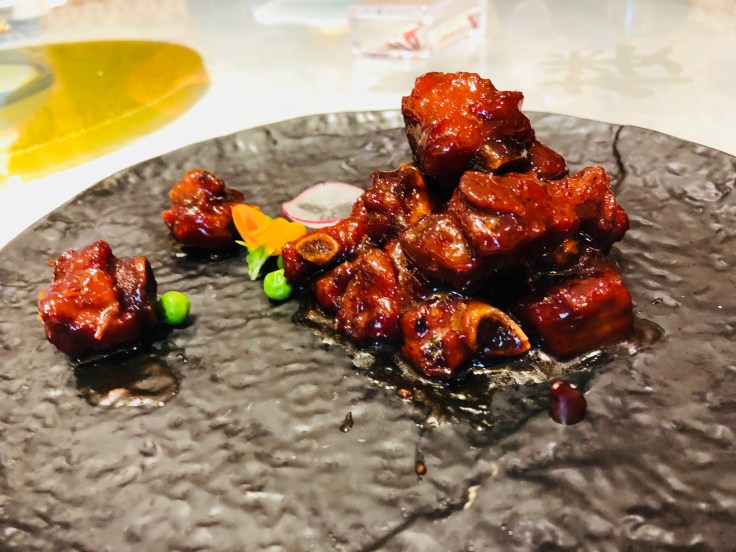
During this Christmas vacation, I came back to my home town, Shanghai to share time with my parents. Neither a southern or northern city, the Shanghainese dishes combine both the sweetness from the south and the salty from the north, forming one of the eight main types of dishes flavours of China.

The dish that I am introducing today is my favourite dish among all the Shanghainese dishes——Sweet and Sour Ribs. As its names says, it contains both sweetness and sourness, and a little bit salty. Usually, it is made as a cold dish in restaurants; however, most families eat them when it is still hot.

Here is a Sweet and Sour Ribs recipe that I found online:

  1. Cut pork ribs into pieces with the length of 5 to 6 centimetres.
  2. Make a pot of water boiled, and put the ribs into water for several minutes, in order to get the impurities of the ribs out.
  3. Take the ribs out of water, and out them into a pan.
  4. Add a little bit cooking wine, ginger, green onion, and garlic into the pan and cook for 15 minutes.
  5. Take the ribs out of the pan into another pan with hot oil, and then pour some cooking wine into the pan.
  6. Add light soy sauce, rice vinegar, rock candy into the pan, and mix them with the ribs.
  7. Turn the fire to the smallest level, and put on the pot cover for 5 to 8 minutes.
  8. Add dark soy sauce into the pan to give ribs a dark red color.
  9. The dish will be ready when the soup becomes thick.

I really enjoyed my vacation with all kinds of Shanghainese food, and hope you can go to Shanghai and try its food. ^~^

Replicating Instant Ramen

358F126A-C4F1-4896-8D9A-078F269AEC7B

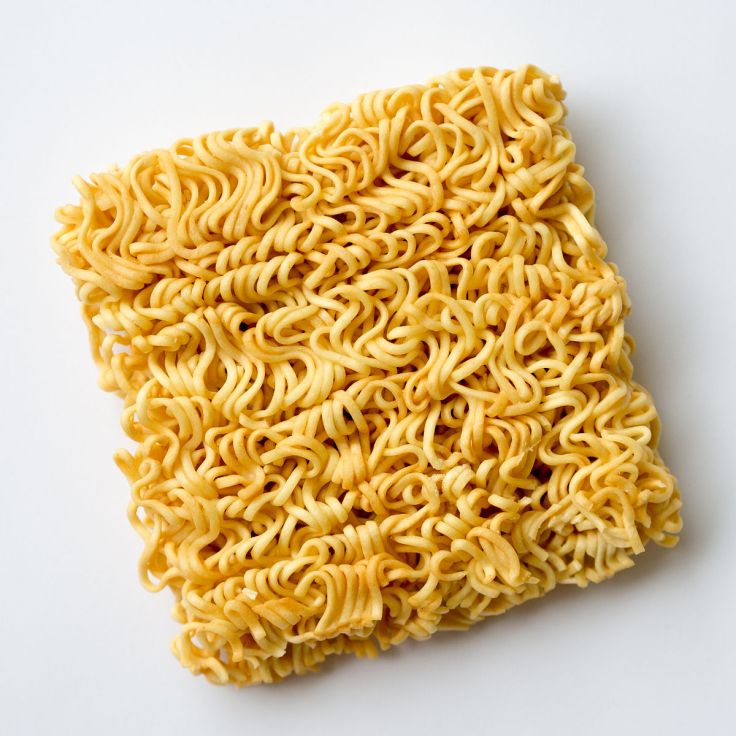
Today in class, we watched a video ” Pastry Chef Attempts to Make Gourmet Instant Ramen“, about making instant ramen, and I think this video will be useful to people who love to eat instant ramen, but worry about the safety issues of it. With this video, they can make instant ramen on their own through the healthy ingredients, so that they no longer need to worry eating instant ramen will make them unhealthy.

In this video, the chef, Claire tried three ways to make the noodles. According to Wikipedia, Claire found that the key ingredient of instant noodles is something called “Kansui”, an alkaline solution consisting of a 9:1 ratio of sodium carbonate to potassium carbonate, so that the noodles can get springiness and chewiness (4:59). So she decided to use baking sodium solution to reduce acidity so that the noodles can be basic (5:18). However, this kind of noodles could not be rehydrated. Therefore, at last, she tried to add baked baking soda, turning sodium bicarbonate into sodium carbonate, which make the dough more alkalinic so that it can retain its texture after fried (13:21). And this time, she succeeded. The final recipe of noodles is the following:

280g water

10g salt

5g baked baking soda

500g bread flour

After mixing these ingredients together, Claire boiled them first, and then air fried them with low temperature. This aimed to make the noodles have the ability to rehydrate, and not make it as mushy as the ones that were fried in oil.

When Claire finished making the noodles, she started to make the chicken-flavour powder, which she called “umami bomb chicken stock”. In this part, she put vegetables and chicken in water to cook, and then pureed the soup into solid. After the soup became sticky, she dehydrated it by putting it in a dehydrator for 18 hours. After the 18 hours, she put the paper-like soup into blender and made them into powder. At last, she added msg and salt to the powder in order to give it a taste of umami. During the cooking process, the starches in food were combined together by the high temperature to form a long chain, which made the soup sticky like “baby food”. When the soup was dehydrating, the starches were losing all the water molecules, which made the soup into “a sheet”. By just adding water to the powder can give the starches back water molecules again to have a soup.

In my opinion, I like this video for it attracts me with its topic “making instant ramen”. I love instant ramen, and I consider it as my second life, not only the food that keeps me alive from school food, but its amazing flavours and tastes. And seeing her successfully replicated instant ramen made me really happy. One point I feel a little bit uncomfortable about this video is it takes too long time on how Claire made the noodles as curve as the noodles she bought. This is just a little bit too off topic. But consider the video as a whole, I am amazed by Claire’s ability to make instant noodles through her knowledge of food science (especially her use of baking soda as alkaline solution to replace Kansui). I pretty enjoyed watching this video.

Our Thai Food Tasting Minicab

IMG_E4943

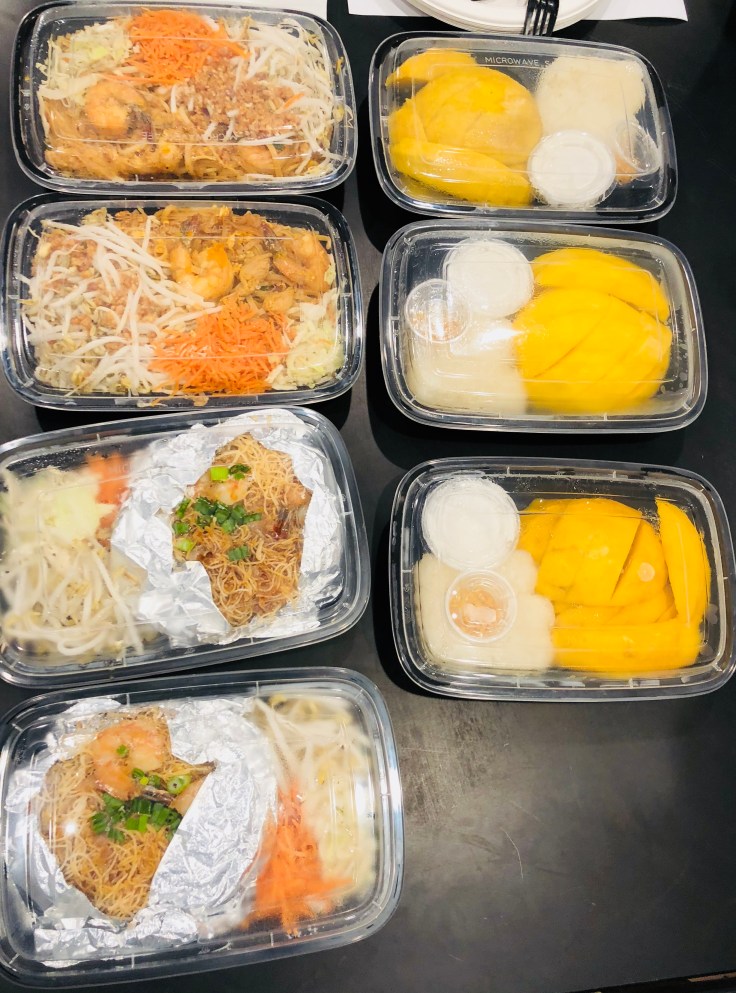
Last Friday, our Food Science class tried three types of Thai food in class to investigate the different functions of starches. We tried Mango Sticky Rice, Pad Thai and Mee Krob. And now, I am blogging the eight topics that we studied.

1. Flavor:

Mango Sticky Rice: the rice is mostly sweet, and a little bit salty.

Pad Thai: No special tastes, very normal.

Mee Krob: Tastes very salty.

2. Texture:

Mango Sticky Rice:  sticky, but very smooth.

Pad Thai: soft and smooth.

Mee Krob: crispy.

3. Cooking Method:
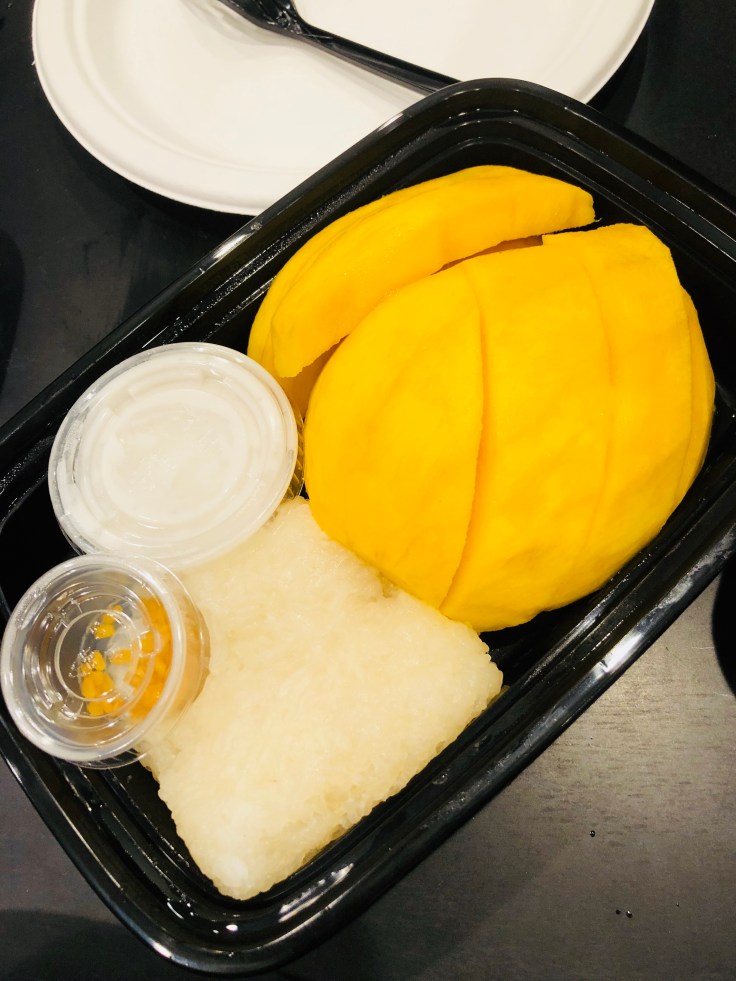
Mango Sticky Rice: Combine the rice and water in a saucepan; bring to a boil; cover             and reduce heat to low. Simmer until water is absorbed, 15 to 20 minutes. While the rice cooks, mix together 1 1/2 cups coconut milk, 1 cup sugar, and 1/2 teaspoon salt in a saucepan over medium heat; bring to a boil; remove from heat and set aside. Stir the cooked rice into the coconut milk mixture; cover. Allow to cool for 1 hour. Make a sauce by mixing together 1/2 cup coconut milk, 1 tablespoon sugar, 1/4 teaspoon salt, and the tapioca starch in a saucepan; bring to a boil. Place the sticky rice on a serving dish. Arrange the mangos on top of the rice. Pour the sauce over the mangos and rice. Sprinkle with sesame seeds.
IMG_E4946

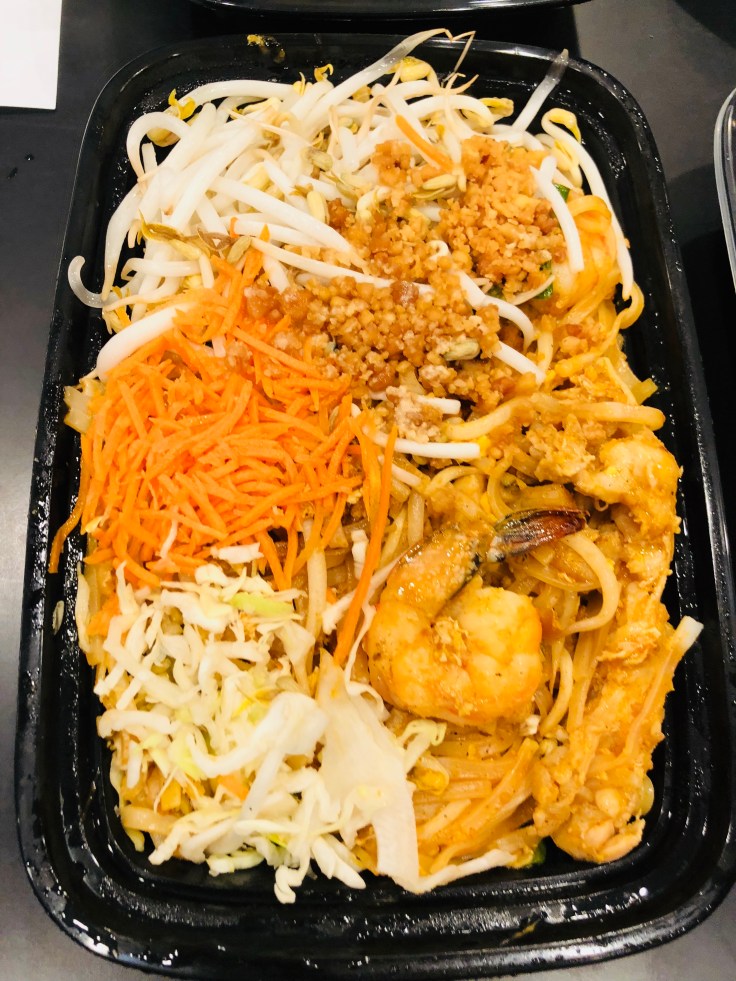
Pad Thai: Soak rice noodles in cold water 30 to 50 minutes, or until soft. Drain, and set aside. Heat butter in a wok or large heavy skillet. Saute chicken until browned. Remove, and set aside. Heat oil in wok over medium-high heat. Crack eggs into hot oil, and cook until firm. Stir in chicken, and cook for 5 minutes. Add softened noodles, and vinegar, fish sauce, sugar and red pepper. Adjust seasonings to taste. Mix while cooking, until noodles are tender. Add bean sprouts, and mix for 3 minutes.
IMG_E4944

Mee Krob: Fill a wok ⅓ full of vegetable oil and heat until hot. Deep-fry vermicelli in batches for 5 sec, or until crispy. Drain and set aside. In a separate wok, heat 
2 tablespoons oil, and stir-
fry capsicum for 4-5 min. Remove and set aside. Add onion and prawns and stir-
fry for 2-3 min. Set aside. Add fish sauce, 2 tablespoons water, lime juice, sweet chilli sauce and sugars. Stir for 4-5 min over low heat until thick. Add noodles and toss gently in sauce, add remaining ingredients and toss for 1-2 min. Spoon onto a platter 
and garnish with chopped tomatoes and coriander.
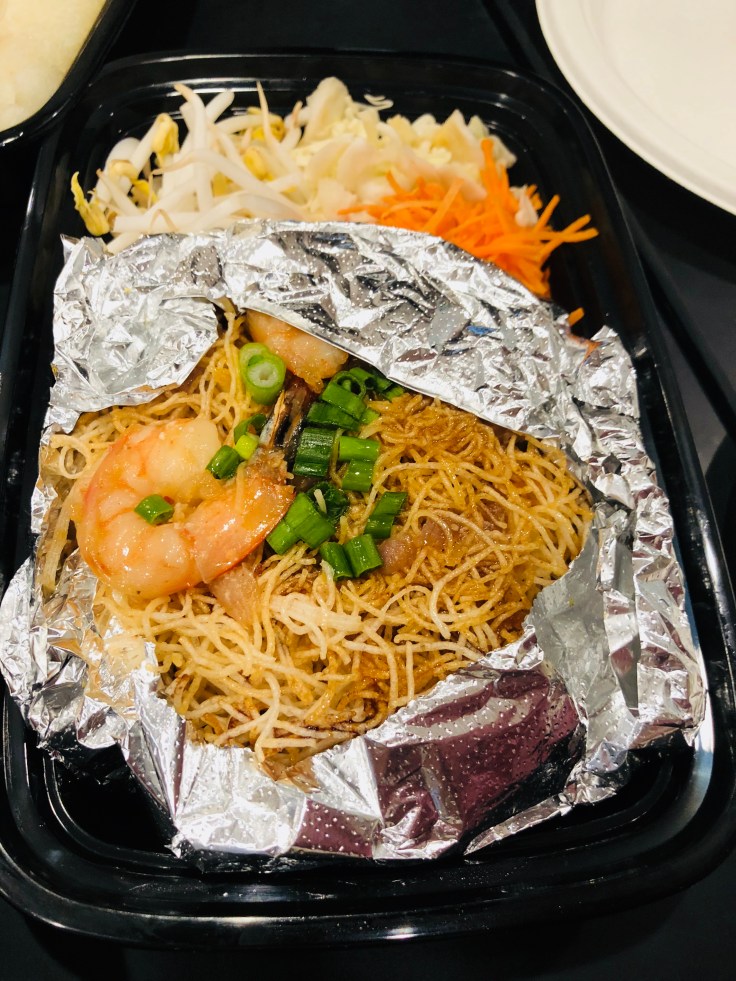
IMG_E4945

4.  Types of starch used:

Mango Sticky Rice: 1 1/2 cups short-grain white rice

Pad Thai: 1 (12 ounce) package rice noodles

Mee Krob: 80 g dried vermicelli noodles

5. Starch fraction in each variety of starch:

Mango Sticky Rice: (n = 80, r = 0.54, P <or= 0.001)

Pad Thai:  (n = 80, r =-0.29, P <or= 0.05)

Mee Krob: (n = 80, r = 0.21, P > 0.05)

6. How do the different starch fraction affects the texture and flavor:

Starch with more amylose provides a sweeter taste, and starch with more amylopectin provides more stickiness.

7. What would happen if you switch the starches in each dish:

If the starches are switched, all of the dishes will taste very bad because theMango Sticky Rice will be hard and rough and Mee Krob will be sticky and nasty.

8. Recipes of each dish:

Mango Sticky Rice:

1) 1 1/2 cups uncooked short-grain white rice

2) 2 cups water

3) 1 1/2 cups coconut milk

4) 1 cup white sugar

5) 1/2 teaspoon salt

6) 1/2 cup coconut milk

7) 1 tablespoon white sugar

8) 1/4 teaspoon salt

9) 1 tablespoon tapioca starch

10) 3 mangos, peeled and sliced

11) 1 tablespoon toasted sesame seeds

          Pad Thai:

  1. 3 tablespoons white sugar
  2. 1/8 tablespoon crushed red pepper
  3. 2 cups bean sprouts
  4. 1/4 cup crushed peanuts
  5. 3 green onions, chopped
  6. 1 lemon, cut into wedges
  7. 1 (12 ounces) package rice noodles
  8. 2 tablespoons butter
  9. 1 pound boneless, skinless chicken breast halves, cut into bite-sized pieces
  10. 1/4 cup vegetable oil
  11. 4 eggs

          Mee Krob:

1.80 g dried vermicelli noodles broken into small pieces

2. 1 red capsicum diced

3. 1 small onion finely sliced

4. 250 g raw peeled tail on prawns

5. 2 Tbsp fish sauce

6. 1 Tbsp lime juice

7. ¼ cup sweet chilli sauce

8. 2 Tbsp caster sugar

9. 2 Tbsp palm sugar

Citations:

Mango Sticky Rice

Pad Thai

Mee Krob


Our Own Marshmallow Biscuits

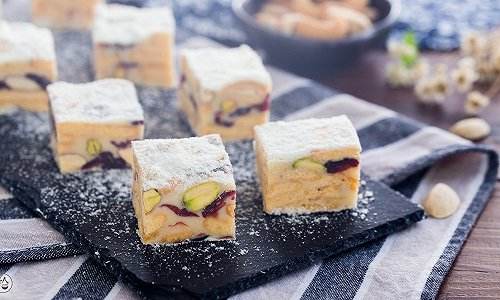
This week our mission is to create our own recipes. And our group chose to make a Chinese dessert called “Marshmallow Biscuits”, which has appearance like this:

雪花酥

Here is the original recipe of it:
1. Non-stick pan

2. Milk Powder 45 grams

3. Marshmallow 150 grams

4. Butter 40 grams

5. Dry Blueberry 40 grams

6. Nuts 60 grams

7. Biscuit 180 grams

This recipe can make Marshmallow Biscuits white, sweet with a little bit salty, and a texture of soft and gummy.

But our own recipes are different from the original one. We will use three types of substitutes separately in order to create three kinds of different Marshmallow Biscuits^ ^

The first substitute we will use is arabinose, which is uptake from sucrose, to replace the marshmallow in the original recipe. Because all of the recipes of Marshmallow Biscuits we found online are using marshmallow as the sweetness-contributer, we want to see what difference will be made if we use another kind of sugar. In my opinion, using arabinose will change the texture of our Marshmallow Biscuits from soft to hard, because arabinose is a type of hard candy, and we wish to see it changing the texture of Marshmallow Biscuits dramatically.

The second and third changes we will try is the biscuits we use. The original recipe to make biscuits is:

1.  One egg

2.  Two egg yolks

3.  Sugar 50 grams

4.  Cake flour 80 grams

As our second change, we will use the combination of regular flour and corn starch with the ratio of 4:1 as a substitute of cake flour. We are expecting to see the biscuits will get a closer inside structure due to the sticky characteristic of corn starch.

For our third, which is also the last change, we are going to use coconut powder to take the place of cake flour. Because coconut powder is made from coconuts, so we hope to have biscuits have a little bit of coconut taste and a good smell.

All of these changes are chosen because we want to see what change will be made on Marshmallow Biscuits with different types of sugar and starches. And wish we can successfully make those Marshmallow Biscuits with these ingredients! ^~^


The week of cookies

Last week we made four groups of cookies with different types of sugar: two groups with original sugar, one group with Sucralose, and the other group with Aspartame. All of them are delicious in different ways, and here are the recipes of these three kinds of sugar.

Basic recipe with original sugar:

224 g Shortening

150 g Sugar

158 g Brown sugar

5 ml Vanilla

94 g Egg

248 g Flour

4 g Baking soda

6 g Salt

Recipe with Sucralose:

224 g Shortening

3/4 cup Sucralose

158 g Brown sugar

5 ml Vanilla

94 g Egg

248 g Flour

4 g Baking soda

6 g Salt

Recipe with Aspartame:

224 g Shortening

18 g Aspartame

158 g Brown sugar

5 ml Vanilla

94 g Egg

248 g Flour

4 g Baking soda

6 g Salt

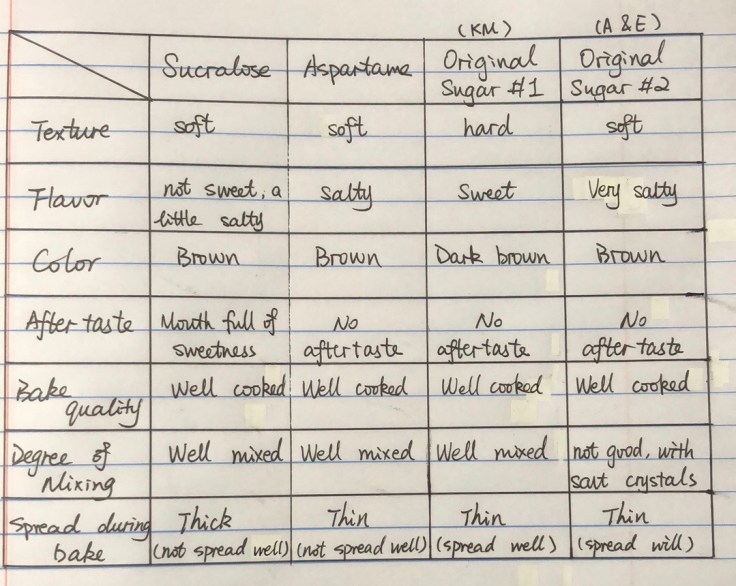
They are mostly the same, except for the types of basic sugar they used. And here is the difference between these four groups of cookies:

IMG_4472

From this chart above, it can be told that even with the same ingredients, the results can be different (like the two groups with original sugar).

Then, here is a recipe I created for diabetes based on my research on sugar substitutes:

224 g Shortening

18 g Aspartame

3/8 cup Truvía Brown Sugar Blend (1/2 cup used for 1 cup of brown sugar)

5 ml Vanilla

94 g Egg

248 g Flour

4 g Baking soda

6 g Salt

The ingredients in red can be any kind of sugar substitutes, which contain low calorie. According to my research, sugar substitutes used in food can help people with diabetes take in less calorie, which is good for their health, because they contain very low calorie while they can still provide the sweetness as regular sugar.

From my research, sugar diabetes from big companies like Stevia, Xylitol, Erythritol are completely natural and organic. They contain much less calorie than general sugar, which is mush more healthier for people’s health.

Fondant Experiment

In the next two weeks, we learned how to make fondant in class, and we made three kinds of fondant altogether: original fondant(with only sugar), fondant with corn syrup, and fondant with butter. Because of the difference between the ingredients, these three kinds of fondant have different properties from each other. The butter fondant is yellow, because of the color of butter, and it is semisolid, while it tastes sweet at first, then tastes like cold fried-chicken which is a little bit disgusting. It was easy to break when we tries to roll it. The corn syrup fondant is the best one among them: it is completely solid, it has high flexibility, and it is also yellow because of corn. The most important point is it tastes best among these three! About the original fondant, which tastes as normal sugar, because the lack of cooking time, it is still liquid, and it is white due to the sugar.

I found a professional recipe of fondant, which is:

.25 ounce unflavored gelatin
1/4 cup of cold water
1/2 cup of glucose syrup (or corn syrup)
1 tablespoon glycerin
1oz shortening or butter
1 teaspoon vanilla extract
8 cups sifted confectioners’ sugar

In my opinion, our class recipe did not work well because of the lack of gelatin as the professional recipe uses, which enables the compounds in fondant to be bonded closely and makes the fondant itself more flexible. Also, the professional recipe combines both corn syrup and butter, which takes the advantages of both of them and makes the fondant good.

Just a Test Blog ^^

Hello everyone, this is “skr foodie” from “Super skr Food” organization.^_^

I love all kinds of food and every weekand I am going to try them one by one\(^_^)/

I think Food Science will teach me different elements’ job in all kinds of food, and I wish to be an expert on this. &_&

This is my first time writing a blog, and hope everyone will like it!IMG_E3026.jpg

Create a free website or blog at WordPress.com.

Up ↑

Design a site like this with WordPress.com
Get started